Good oral hygiene is about more than having a bright smile. Daily dental care helps remove plaque, protect your teeth from cavities, support healthy gums, and lower your risk of common oral health problems.
The good news is that you do not need a complicated routine to keep your teeth and gums healthy. A few simple habits, done consistently, can make a big difference.
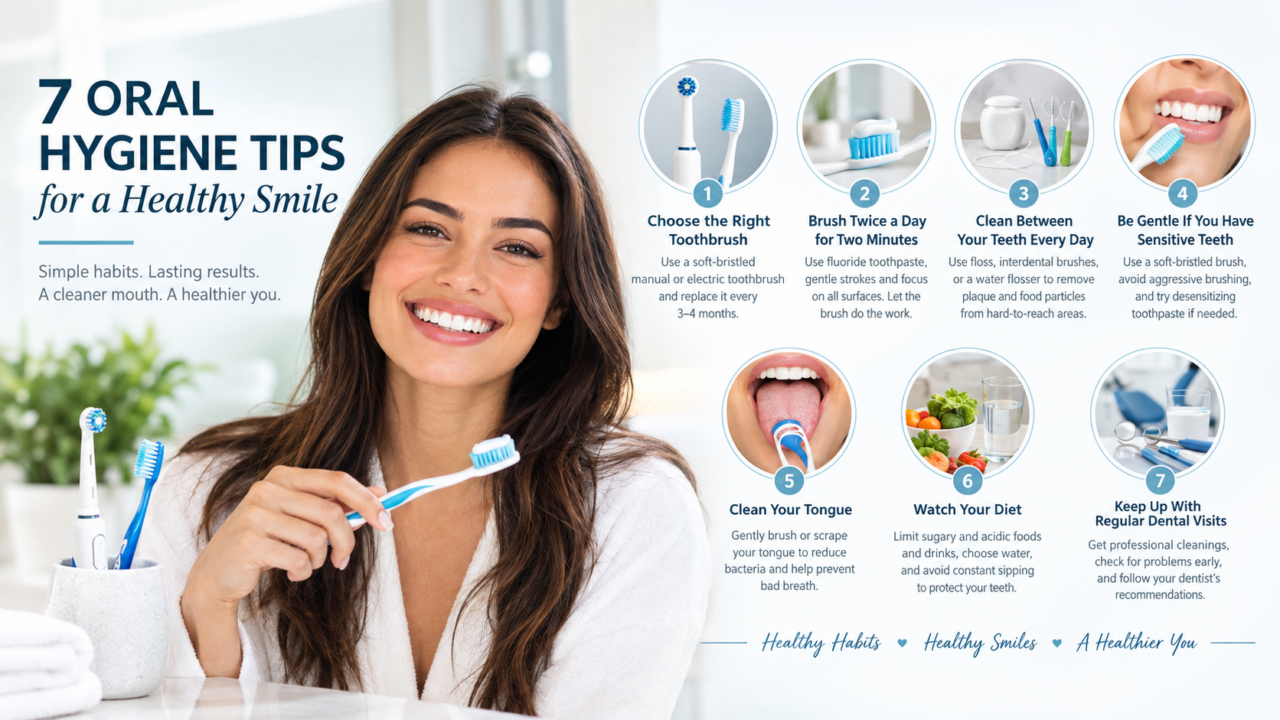
Here are seven oral hygiene tips to help you maintain a healthy smile.
1. Choose the Right Toothbrush
Both manual and electric toothbrushes can clean your teeth effectively. However, research has found that powered toothbrushes can provide a small additional benefit in reducing plaque and gingivitis compared with manual toothbrushes.
If you use an electric toothbrush, you do not need to press hard or scrub your teeth. Let the brush do the work.
Whether you choose an electric or manual toothbrush, look for one with soft bristles. Replace your toothbrush or brush head every three to four months, or sooner if the bristles become worn or frayed.
2. Brush Your Teeth Twice a Day for Two Minutes
One of the most important oral hygiene habits is simple: brush your teeth twice a day for two minutes using fluoride toothpaste.
The American Dental Association recommends brushing twice daily with fluoride toothpaste. Brushing for two minutes helps remove more plaque than brushing for a shorter period.
When brushing, use gentle, short strokes and pay attention to the gumline, the outside and inside surfaces of your teeth, and your chewing surfaces.
You do not need to scrub your teeth. Brushing too aggressively can irritate your gums and may contribute to gum recession over time.
If your electric toothbrush has a built-in two-minute timer, use it to make sure you are brushing for the recommended amount of time.
3. Clean Between Your Teeth Every Day
A toothbrush cannot effectively reach every area between your teeth. This is why cleaning between your teeth is an important part of daily dental hygiene.
The ADA recommends cleaning between your teeth once a day. Dental floss is one option, but it is not the only one. Depending on your teeth and gums, you may also benefit from interdental brushes, water flossers, or other interdental cleaners.
Cleaning between your teeth helps remove food particles and plaque from areas that are difficult to reach with a toothbrush. It can also help reduce the risk of cavities and gum disease.
The best interdental cleaning method is one you can use correctly and consistently. If you are not sure which option is right for you, ask your dentist or dental hygienist.
4. Be Gentle If You Have Sensitive Teeth or Receding Gums
Tooth sensitivity can make everyday activities such as drinking something cold or eating something hot uncomfortable.
If you have sensitive teeth or gum recession, avoid aggressive brushing. A soft-bristled toothbrush and gentle brushing technique can help protect your teeth and gums.
Desensitizing toothpaste can also help some people manage dentin sensitivity. Toothpaste ingredients such as stannous fluoride, potassium-based compounds, and arginine have been studied for reducing sensitivity.
If sensitivity continues, becomes worse, or affects your daily life, it is worth having your teeth and gums checked. Sensitivity can sometimes be related to gum recession, tooth wear, cavities, cracks, or other dental problems.
5. Clean Your Tongue
Your tongue can collect bacteria and a coating that may contribute to bad breath.
Gently cleaning your tongue with your toothbrush or a tongue cleaner can help reduce tongue coating and some of the compounds associated with bad breath. Research has found that adding tongue cleaning to toothbrushing can reduce indicators of oral malodor and tongue coating.
You do not need to scrub your tongue aggressively. Gently brush or scrape the surface of your tongue as part of your normal oral hygiene routine.
If you have persistent bad breath even with good oral hygiene, talk with your dentist. Ongoing bad breath can sometimes be related to gum disease, cavities, dry mouth, or another oral health problem.
6. Watch Your Diet and Protect Your Teeth From Acid and Sugar
Your daily diet also affects your oral health.
Frequent consumption of foods and drinks high in added sugar can increase the risk of tooth decay. Limiting sugary snacks and drinks can help protect your teeth. Drinking water, especially fluoridated water where available, is also a simple way to support good oral health.
It is also helpful to avoid constantly sipping sugary or acidic drinks throughout the day. Giving your teeth breaks between meals and drinks can reduce repeated exposure to acids and sugars.
Good oral hygiene works best when it is combined with healthy eating habits.
7. Keep Up With Regular Dental Visits
Daily brushing and interdental cleaning are important, but they do not replace professional dental care.
Regular dental visits allow your dental team to check your teeth, gums, and overall oral health. Professional cleanings can also remove hardened plaque, also called tartar or calculus, that cannot be removed with normal brushing at home.
The CDC recommends that adults see a dentist at least once a year, while some people may need more frequent visits based on their individual oral health needs.
You should also contact your dentist if you notice:
-
Bleeding or swollen gums
-
Persistent bad breath
-
Tooth sensitivity
-
Tooth pain
-
Loose teeth
-
Receding gums
-
Changes in your bite
-
A sore or unusual area in your mouth that does not heal
Early attention can help identify problems before they become more serious.
How Oral Health Connects With Your Overall Health
Your mouth is an important part of your overall health.
Gum disease, also called periodontal disease, is an inflammatory condition that affects the tissues supporting your teeth. Gingivitis can often be prevented and treated with good oral hygiene and professional dental care. Periodontitis is more advanced and can cause loss of bone around the teeth.
Research also continues to show a connection between periodontal disease and other health conditions.
In December 2025, the American Heart Association published an updated scientific statement on periodontal disease and atherosclerotic cardiovascular disease. The statement found growing evidence of an association between periodontal disease and cardiovascular disease, while also noting that a direct cause-and-effect relationship has not yet been established.
That is another reason why taking care of your gums is an important part of taking care of your overall health.
The Bottom Line
A healthy smile starts with simple daily habits.
Brush twice a day for two minutes with fluoride toothpaste. Clean between your teeth every day. Use a soft-bristled toothbrush and avoid brushing too hard. Keep your tongue clean, limit added sugar, and maintain regular dental visits.
If you are looking for personalized advice about your teeth and gums, the team at Innovative Dental Aesthetics can help you understand your oral health needs and create a dental care plan that fits you.
Explore our General Dentistry services to learn more about preventive dental care and maintaining healthy teeth and gums.
A healthy mouth is an important part of a healthy life, so give your smile the daily care it deserves.