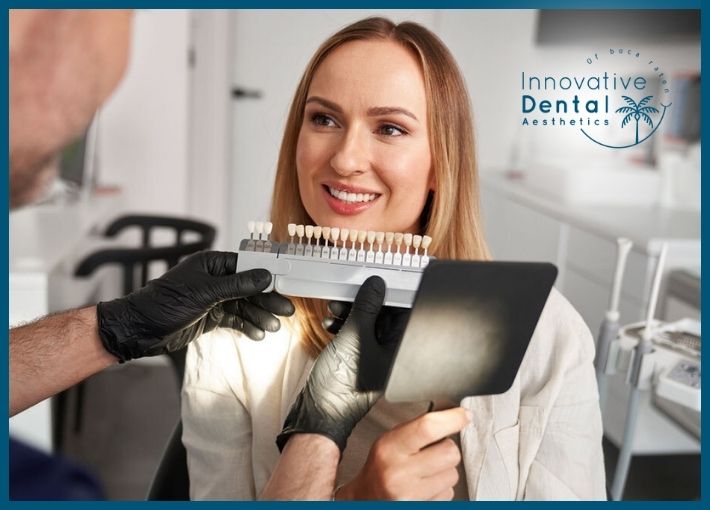
Here’s a conversation we have in our Boca Raton office almost daily. A patient sits down, points to a chipped edge or a gap or a front tooth that’s always bothered them, and asks: “Do I need veneers for this, or is there something simpler?”
It’s the right question. Veneers and bonding solve many of the same cosmetic problems — chips, gaps, discoloration, uneven or misshapen teeth — but they get there by very different roads. One is a quick, affordable touch-up. The other is a long-term transformation. Neither is “better.” The right answer depends on your teeth, your goals, and your budget.
So let’s have that conversation here, chairside style.
Bonding: The One-Visit Fix
Dental bonding uses tooth-colored composite resin — the same durable material used in modern white fillings — applied directly to your tooth, sculpted to hide the chip, close the gap, or rebuild the worn edge, then hardened with a curing light and polished to blend with the surrounding enamel.
Why patients love it:
- It’s fast. Most bonding is done in a single visit, often with little or no drilling and frequently no anesthetic.
- It’s conservative. Your natural tooth stays almost entirely intact. Bonding adds material; it rarely removes any.
- It’s affordable. Bonding typically costs a fraction of what a veneer does, per tooth.
- It’s reversible and repairable. If bonding chips down the road, it can usually be patched in one appointment.
The trade-offs are real, though. Composite can stain over time — coffee, red wine, and smoking will show. It’s not as strong as porcelain, so edges can chip, especially if you bite your nails or grind. Expect bonding to look great for roughly three to ten years before it needs refreshing. And across many teeth, composite can struggle to match the depth and translucency of natural enamel.
Bonding shines when the problem is small and localized: one chipped corner, a modest gap, a single short tooth, a rough edge.
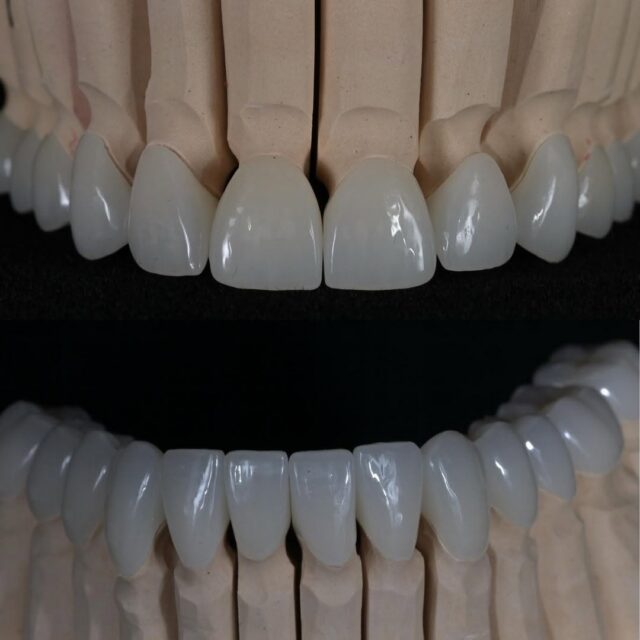
Veneers: The Long-Game Transformation
A porcelain veneer is a thin, custom-crafted shell that covers the entire front surface of a tooth. Each one is designed and fabricated for you — the shape, the shade, the translucency, even the subtle surface texture that makes teeth look like teeth instead of tile.
Why veneers are the gold standard for major smile changes:
- Unmatched aesthetics. Porcelain interacts with light the way enamel does. Well-made veneers are essentially undetectable.
- Stain resistance. Porcelain doesn’t absorb coffee and wine the way composite can. The shade you choose is the shade you keep.
- Strength and longevity. With good care, veneers commonly last ten to fifteen years or more.
- Total design control. Because veneers cover the whole visible surface, they can change color, shape, length, and alignment at once — across your entire smile if you want.
The trade-offs: veneers usually require removing a thin layer of enamel, which makes them a permanent commitment — that tooth will always need a veneer or crown. They cost significantly more per tooth than bonding. And the process takes at least two visits, since your veneers are crafted in a lab between appointments.
Veneers earn their price when you want a comprehensive change: multiple discolored or worn teeth, deep staining that whitening can’t touch, or a smile you want redesigned rather than patched.
“Bonding and veneers are both wonderful tools — the art is knowing which one serves the patient. I’d never put veneers on someone whose concern is one small chip, and I won’t bond eight front teeth when porcelain would give them a result that lasts three times as long. The plan has to fit the person.” — Dr. Derek Gatta, Board-Certified Prosthodontist, Innovative Dental Aesthetics
Five Questions That Point to Your Answer
Run through this quick list:
- How many teeth are we talking about? One or two, bonding is often plenty. Four or more, veneers usually deliver a more uniform, longer-lasting result.
- Is discoloration part of the problem? Surface stains respond to whitening; deep internal discoloration usually calls for porcelain, since bonding can’t fully mask it and may stain itself.
- How long do you want it to last? If you want to make one decision and not think about it for a decade or more, that’s the veneer argument. If you’re comfortable with periodic touch-ups, bonding is friendlier upfront.
- What’s your budget today versus over time? Bonding costs less now but may be redone several times over the life of one veneer. Sometimes the math favors porcelain; sometimes it doesn’t.
- Do you grind your teeth? Heavy grinders can break both, so this changes the plan — often adding a night guard and influencing material choice. Be honest about it.
There’s also a middle path: some patients start with bonding now and move to veneers later, once they’re ready for the bigger investment. Done thoughtfully, bonding doesn’t burn that bridge.
[ IMAGE 3 — link to: https://innovativedentalaesthetics.com/services/ ]
Why the Person Matters More Than the Product
Before you price-shop either option, know this: results in cosmetic dentistry depend far more on the hands and eyes doing the work than the material chosen.
A prosthodontist is a dentist with years of additional specialty training in restoring and replacing teeth — exactly this work. At Innovative Dental Aesthetics, Dr. Gatta brings board-certified prosthodontic training to every veneer case and bonding appointment — the artistry and the engineering both get taken seriously. You can explore what we offer on our services page, including before-and-after results from real patients.
Frequently Asked Questions
Is bonding or veneers better for a chipped front tooth?
For a single small chip, bonding is usually the smarter first choice — one visit, minimal cost, and your natural tooth stays intact. If the tooth also has deep discoloration or you’re planning a broader smile change, a veneer may serve you better.
How much do veneers cost compared to bonding?
Bonding typically runs a few hundred dollars per tooth, while porcelain veneers are a four-figure investment per tooth. The gap narrows over time, since veneers last considerably longer before needing replacement. A consultation will get you exact numbers for your case.
Do veneers ruin your natural teeth?
No — but they do commit them. Most veneers require removing a thin layer of enamel, so the tooth will always need a veneer or crown afterward. Under a well-made veneer, the tooth itself stays healthy and protected.
How long does dental bonding last on front teeth?
Typically three to ten years, depending on your bite, habits, and diet. Bonding on biting edges wears faster than bonding on flat surfaces, and it can be refreshed or repaired easily when it dulls or chips.
Full mouth rehabilitation is one of the most transformative treatments we offer—restoring function, health, and confidence all at once.
Dr. Gatta explains how we customize every case to fit each patient’s unique needs.
Find Out Which One Fits Your Smile
The honest answer to “veneers or bonding?” starts with an exam, a conversation about your goals, and straight talk about the trade-offs.
Schedule your consultation: Innovative Dental Aesthetics — Services
Call us at (561) 997-6622.
Follow Innovative Dental Aesthetics on Instagram @innovativedentalaesthetics